
While it may be comical to watch someone slip and fall in a movie, it’s anything but funny when you find yourself injured as a result of an individual or a company’s negligence.
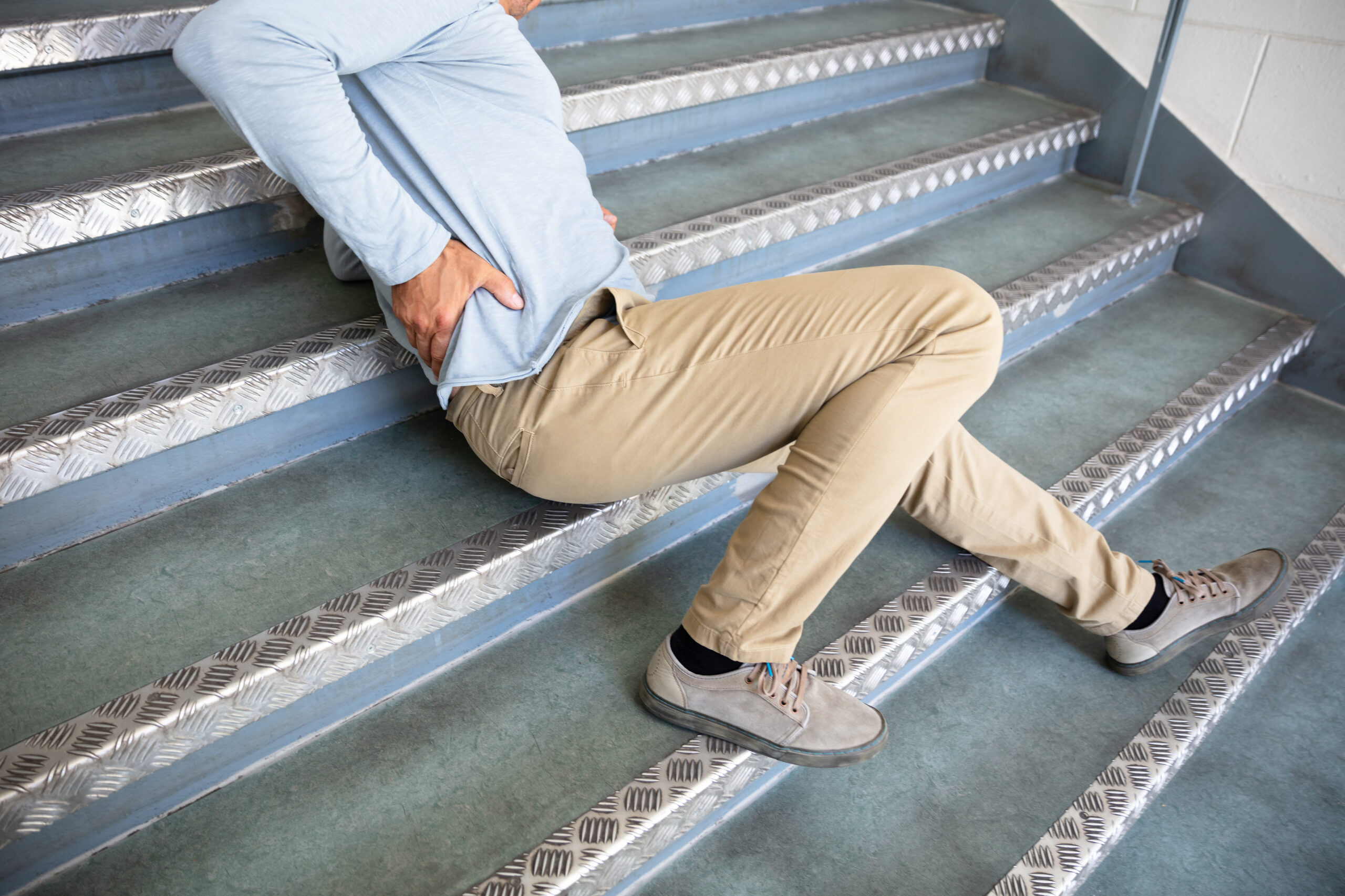 Slip-and-fall and trip-and-fall injuries can happen almost anywhere. Even injuries in your own home or apartment can fall into this category if your landlord is negligent. Larger establishments such as casinos, shopping malls, hotels, public buildings, or other places of business can be held liable if you are injured on a malfunctioning escalator or elevator, for example. Premises liability can also apply if you are hurt on the job.
Below are some frequently asked questions we hear from our clients in slip and fall or premises liability cases.
What are the common causes of slips and falls?
Slips and falls are usually caused by a hazard that isn’t obvious to the person who falls It could be a foreign substance on the floor (water, cleaning solution, food, oil, etc.) or a condition such as a crack in a sidewalk, a dip or rise, a step, etc.
What if the accident happened on a loved one’s property? I don’t want to sue my loved one, but my medical bills are piling up.
Most have insurance to cover the costs incurred by others who are injured on their property. Even if you don’t want to sue your loved one, chances are that if they have insurance, you won’t have to. The insurance company pays the claim. If you have to sue, the insurance company will provide a defense for your loved one and will most likely pay any damages awarded.
What if the incident occurred on a rental property? Who is responsible, the landlord or the tenant?
When a slip and fall incident occurs on a rental property, the owner of the property is generally liable. However, the owner may transfer that responsibility to the tenant through a lease or other document. Regardless, pursuing a claim against both will allow the discovery of the documents and other evidence that will establish the liability of those parties. They may both be liable.
Suffering an injury in a sidewalk accident, crosswalk accident, or on a slick floor due to owner oversight may entitle you to compensation for your medical expenses, loss of wages, pain and suffering, and emotional trauma. Contact us for legal consultation!

Jacob A. Maples
Jacob holds an AV Preeminent Rating from Martindale-Hubbell – a distinction held by approximately 10% of all attorneys. Jacob’s practice is focused on civil litigation. He primarily represents individuals in personal injury matters as well as disputes with insurance carriers.